Sharon "Shaz" Renold
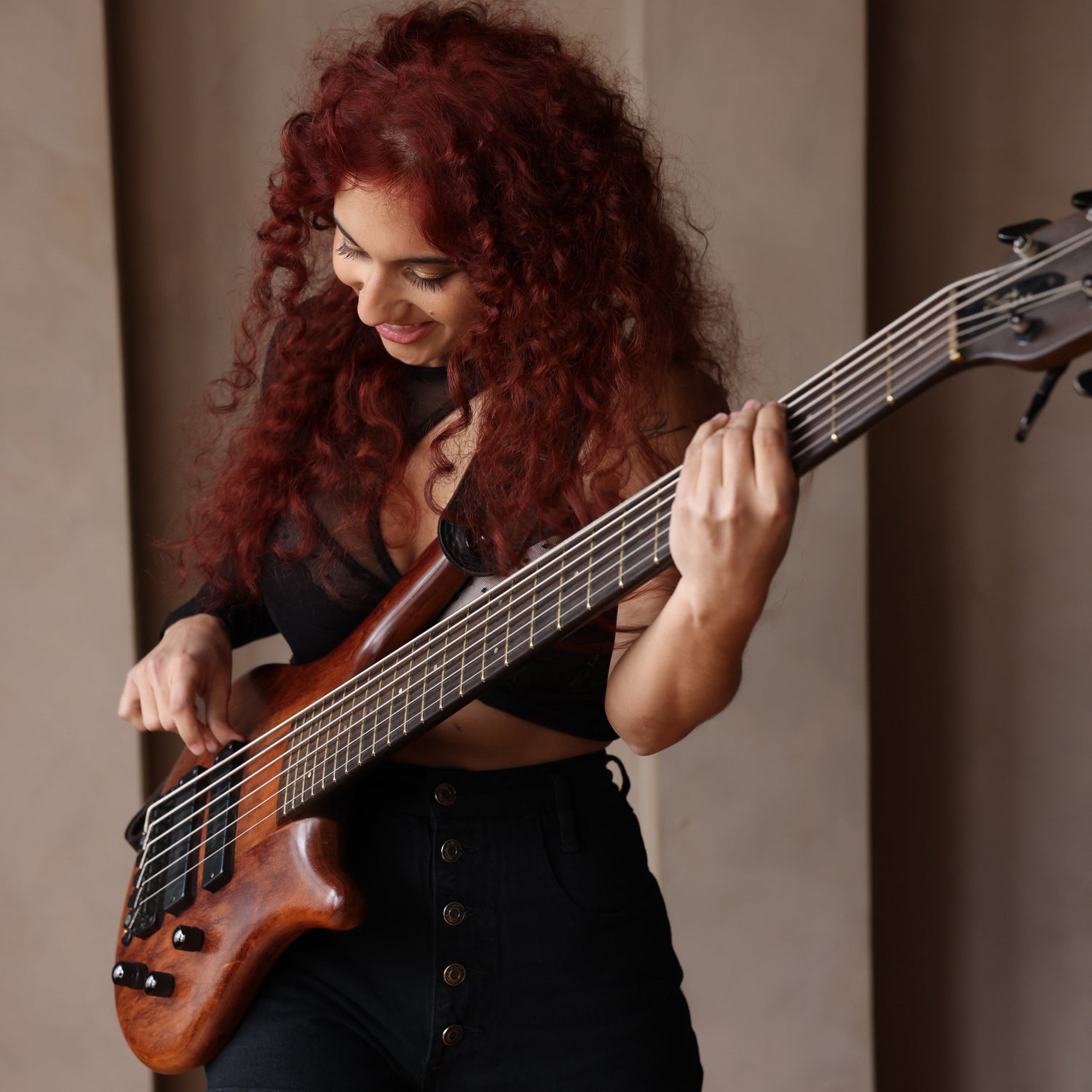
Bassist, educator, and creator with a serious love for groove. We caught up with Shaz to talk about her musical journey, influences, and life on the low end.
Sharon "Shaz" Renold is a bassist with a serious love for groove. Known for her musical instincts and passion for the low end, Shaz brings a powerful presence to every stage and session she plays. We caught up with her to talk about her musical journey, influences, and life as a bassist.
What initially inspired you to pursue a career in music?
I come from a family of musicians. My parents ran the Jazzaar Festival in Switzerland for 35 years, so there were always professional musicians coming through our house. Seeing that world up close at such a young age pretty much eliminated the idea of any other career early on.
Of course, being able to watch incredible artists perform and create up close was a big inspiration for pursuing this life. But what probably pulled me in even more was the day to day energy of those musicians. It felt like a deeply nurturing and supportive community. Being around people who were so passionate about what they did made it hard to imagine not being part of that world when I grew up.
Can you share a memorable moment from your musical journey that has had a significant impact on you?
For the past few years I've been part of the faculty at Berklee's Summer Bass Weekend. Last year I was asked to join one of the faculty panels and did not think much of it at first. But when I arrived that morning and saw who else was on the panel, I was completely taken aback.
The lineup included Victor Wooten, Steve Bailey, Dana Hawkins, Evan Marien, Charles Berthoud and a few others. These were musicians who had been huge inspirations to me growing up and later during my time studying at Berklee.
In that moment a big part of me still felt like I should be sitting in the audience with the students instead of being on stage alongside them.
Standing on stage next to them talking about music and the bass felt incredibly surreal. These were people I had spent years listening to, learning from, and looking up to. It was one of those moments where you suddenly realize you have become part of the same musical community that inspired you in the first place.
What influences have shaped your style of music?
That is a loaded question. I'm very fortunate that my career lets me wear a lot of different hats depending on the project, and those hats often live in very different genres. My roots are definitely in fusion jazz. Artists and groups like Weather Report, Steps Ahead, and many of the musicians that came out of that era were huge influences for me growing up, and that music is still a bit of a happy place for me, even though I do not get to play it in its purest form very often anymore.
My work with the Berklee Indian Ensemble has also opened the door to a lot more world music influences. That space blends beautifully with progressive elements, so artists like Tigran Hamasyan, Dhafer Youssef, and A. R. Rahman have all been really inspiring to me. The ensemble also gives me the chance to experiment a lot more with sound, especially incorporating synth bass textures alongside the electric bass, which has been a really fun creative outlet.
More recently, working as one of the creators for Scott's Bass Lessons has pushed me even further stylistically. Because each video dives into a different topic, I get to explore just about every genre imaginable. It has made me much more curious as a musician. If I hear something intriguing now, my instinct is to break it down and understand what is happening before I put my own spin on it. That process has opened up a lot of new musical possibilities for me.
On the flip side, as a singer and writer my bassist persona mellows out quite a bit. The fascination with rhythm and production is still very much there, but lyrics tend to take the front seat. If you were to scroll through my Spotify playlists you would probably find artists like Dave Matthews Band, Supertramp, The Who, Phoebe Bridgers and others who strike a really nice balance between thoughtful lyrics and interesting production.
If you could create a soundtrack for any historical event, which one would it be and why?
It would have to be the Mars rover Opportunity and its almost unbelievable story of lasting far beyond its expected lifespan. I have always loved stories about space and exploration, so having a real life story that feels as hopeful and romantic as Opportunity's is incredibly inspiring to me. There is something deeply moving about that kind of quiet persistence, especially for a little robot exploring another planet on our behalf.
It is funny though, because I actually have a track on my upcoming album that was inspired by Opportunity's story. So, maybe I have already written that soundtrack?
If you could teleport to any concert in history, which one would you attend and why?
Where the Light Is, John Mayer live at the Nokia Theatre in Los Angeles. I have watched recordings of that show over and over again. The level of musicianship John brings to that performance is just out of this world.
I'm usually not someone who listens to live records. I enjoy hearing the studio versions of songs because they offer insight into an artist's production brain. A recording can be everything the artist imagined it to be, because the studio allows for that.
But this show is the exception to my rule. His performance of Stop This Train in that concert is absolutely outstanding and the studio version almost pales in comparison. Which is wild, because the live version is just him, a guitar, and his foot stomping. There is something incredibly inspiring about that level of musicianship and simplicity.
If you could collaborate with any artist, living or deceased, who would it be and why?
That is a really hard question. I feel like the answer probably changes depending on my mood and the time of day. But one person I consistently find myself fascinated by is Jack Stratton. I am obsessed with his production style, the level of detail he puts into everything, and the humor that runs through so much of his work.
His Vulfmon persona in particular gives me life. The creativity and playfulness in those projects is just incredible. Honestly, I would climb mountains just to be a fly on the wall during one of his sessions, let alone actually getting to participate in one.
What's the most memorable feedback or reaction you've received from a fan?
Two jump to mind... The first is when people, especially female bassists, come up to me and tell me that I am their favorite bassist or that I inspired them to pick up the instrument or take their playing more seriously. That is honestly something I never imagined would happen. Getting to inspire someone else to pursue music feels like one of the highest honors you can receive as a musician. I could already die happy knowing that I have been able to do that for people.
The other one is tone related. For most of my career I played a single bass, used zero pedals, and barely touched the knobs on my instrument. These days my setup looks very different and I experiment a lot more with pedals and sound design. After one show someone came up to me and told me I had some of the gnarliest bass tones they had ever heard live. That was pretty mind blowing and oddly affirming considering how simply I approached my sound for so many years.
How did your collaboration with Plunge Audio begin?
I was lucky enough to try a pair of Plunge Audio IEMs through my friend and co-host at Scott's Bass Lessons, Ian Martin Allison. He connected Scott and me with the team at Plunge, and honestly I have not looked back since.
Up until that point I had been using a $50 pair of IEMs from Amazon. I was actually pretty impressed with how well they held up considering the price, and I used them for years without really thinking much about upgrading.
Funny enough, shortly after I received my Plunge IEMs, that old Amazon pair randomly ripped apart after about four and a half years of zero issues. So it really did feel like the universe was giving me a pretty clear signal that it was time to fully commit to the Plunges.
What specific features do you look for when choosing IEMs for your performances?
Bass clarity is obviously a big one for me, but without it overwhelming the rest of the mix. A lot of IEMs seem to force a tradeoff where you either get a lot of low end or you hear the rest of the band clearly, but not really both at the same time. Ideally everything should feel balanced so you can hear the bass in context rather than as a separate thing. And the Plunge IEMs do an incredible job at finding that balance.
Comfort is another big factor. If you are wearing IEMs for long rehearsals, sound checks, and shows, they need to feel natural and not distracting. The best pairs are the ones you almost forget you are wearing after a while.
What advice would you give to other musicians who are considering using IEMs for the first time?
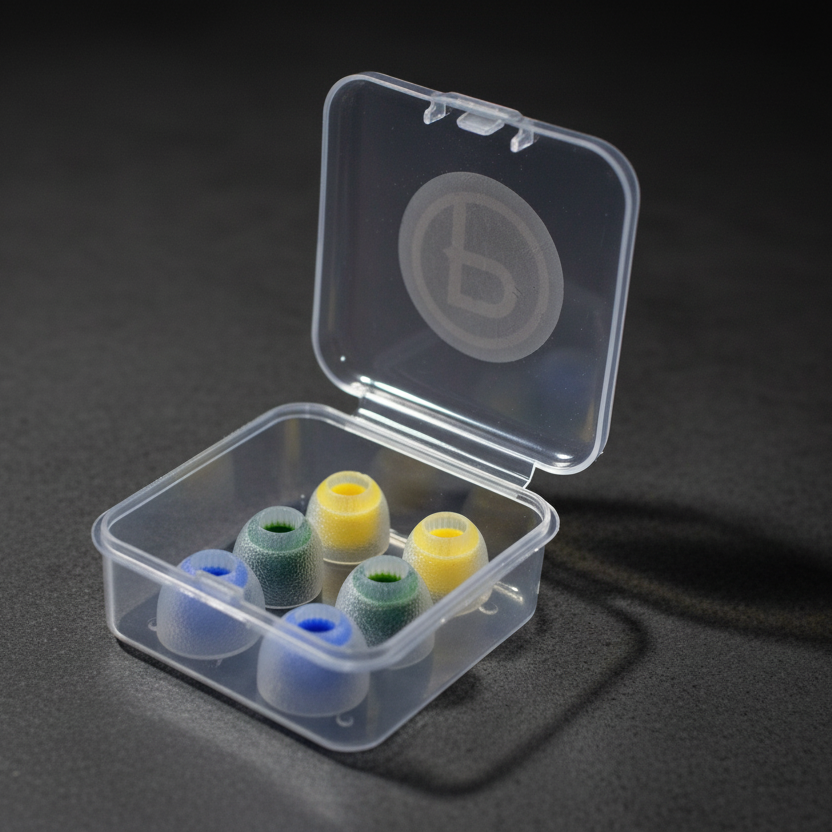
Finding the right size ear tip is probably the single biggest factor for getting a good fit, proper isolation, and solid sound. If the seal is not right, everything else will suffer.
Another thing that is important to understand is that IEMs are often treated as a direct replacement for amps or wedges, but the experience on stage is very different. The isolation can be quite intense and it changes the way you perceive the band, the room, and the audience. That can sometimes dampen the natural energy of a live show, so being aware of that and learning how to compensate for it as a performer is really important.
It is also worth spending a lot of time practicing with your IEMs. Playing with them feels very different from playing with traditional stage sound. For singers in particular it can really affect your sense of pitch and intonation if you are not used to it.
Finally, IEMs are very much a mix thing. If you get the chance to control your own mix, it is important to spend time figuring out what you actually want and need to hear on stage. That freedom can be a lot at first. And if a monitor engineer is running the mix, knowing how to clearly communicate what you need can make a huge difference.