Plunge Cable vs
Linum Cable
Both are 2-pin. Both work with your Unity IEMs. But they feel completely different to wear — and choosing between them comes down to your individual preferences on stage.
Every Unity IEM ships with our standard Plunge cable — a robust, well-built 2-pin cable that does the job reliably in any performance environment. For most musicians, it's all they'll ever need. But we also now carry the Linum 2-pin IEM cable, and the questions have been coming in ever since: what's the actual difference, is it worth it, and who is it for? The answer depends entirely on what kind of performer you are and what you want from your setup.
Two Cables, One Connection
Before anything else — both cables use a standard 2-pin (0.78mm) connector, which means both are fully compatible with the Unity Stage and Unity Dynamic IEMs (purchased after March 1, 2026).
That's where the similarities end. From there, the two cables represent different design philosophies — one optimized for durability and a conventional feel, the other engineered to be as close to invisible as a cable can get.
Plunge Cable
- Standard 2-pin (0.78mm)
- Conventional thickness
- Robust, durable build
- Confident physical presence
- Ships with all Unity IEMs
Linum Cable
- Standard 2-pin (0.78mm)
- Thin
- Lightweight
- Near-invisible when worn
- Soft, skin-friendly TPA jacket
The Plunge Cable: Built to Last
The cable that ships with your Unity IEMs is a well-constructed, conventional IEM cable. It has the heft and build quality you'd expect from a professional monitor setup — the kind of cable that feels solid in your hands, handles the rough and tumble of touring life, and gives you confidence that it's not going to let you down mid-set.
For musicians who aren't bothered by cable weight, who prefer a cable that feels substantial and easy to handle, the Plunge cable is a perfectly capable and reliable choice. It does exactly what a good IEM cable should do.
The Linum Cable: When Less is Everything
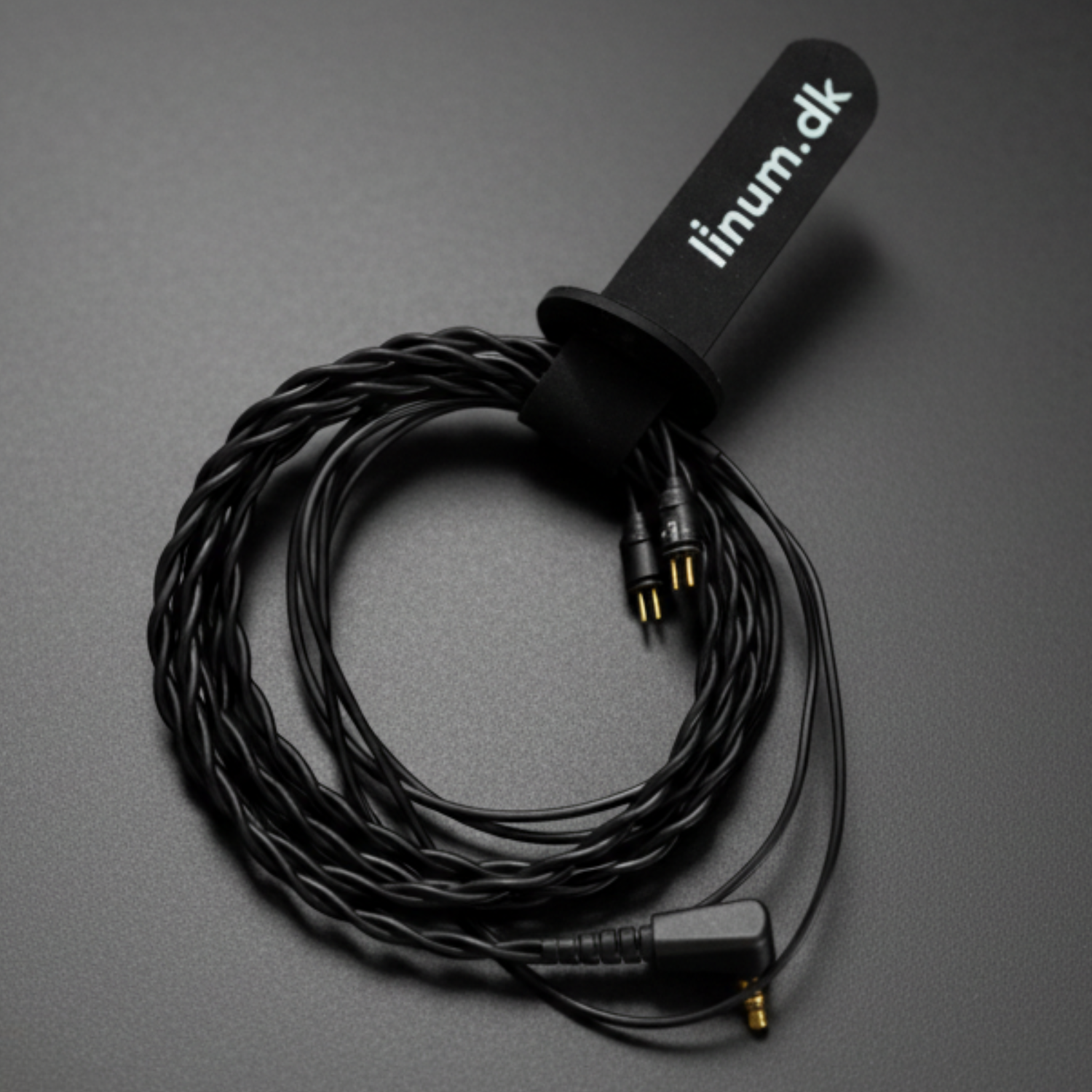
The Linum IEM cable is a different proposition entirely. Made by Danish manufacturer Estron and used by professional performers around the world, Linum has built its reputation on one obsession: making a cable so thin, so light, and so flexible that you stop noticing it's there.
Thickness and weight
The Linum cable is thinner than our standard Plunge cable and a fraction of the weight of a conventional IEM cable. The difference isn't just measurable — it's physically apparent the moment you put it on. Musicians who've switched to the Linum frequently describe the same thing: after a few minutes, they forget the cable is there entirely.
Low-profile design on stage
The Linum cable is engineered to disappear. Its thin profile sits flat against the ear and neck, blends naturally with any performance attire, and eliminates the visual bulk that conventional cables carry. For performers in television, broadcast, or high-production live environments where appearance matters as much as function, this is a significant practical advantage.
Flexibility and microphonics
The Linum cable uses a TPA (thermoplastic amide) jacket — a material that's exceptionally soft against skin, highly flexible, and UV-resistant. This extreme flexibility also reduces microphonics — the cable noise transmitted to the ear when a cable rubs against clothing or moves during performance. A lighter, more pliable cable transmits less of that mechanical noise, which is one of the more underrated quality-of-life improvements for active performers.
Durability despite the thinness
A common concern about thin cables is durability — surely something this fine must be fragile? Estron have designed the Linum to address this directly. The cable is rated to a tensile strength of 60 Newtons (approximately 13 lbs of pull force), and the TPA jacket provides genuine protection against the wear of daily use. These aren't cables that need to be babied. They're cables that were designed specifically for the demands of stage performance.
Side by Side
| Plunge Cable | Linum Cable | |
|---|---|---|
| Connector | 2-pin 0.78mm | 2-pin 0.78mm |
| Thickness | Thick | Thin |
| Weight | Approx. 36.5g | Approx. 7g |
| Profile | Conventional | Low-profile, black |
| Feel | Solid, robust | Barely-there, skin-soft |
| Jacket Material | PVC | TPA — soft, UV-resistant |
| Microphonics | Standard | Reduced — less cable noise |
| plug | Straight | Right Angle (90°) |
| Included With EMs | Yes | Available as an upgrade |
Who Should Upgrade to the Linum?
If cable weight and visibility are things you've never thought about, the Plunge cable is excellent and there's no pressing reason to change. But if any of the following sounds familiar, the Linum is worth serious consideration:
You're a vocalist or frontperson who moves a lot on stage and feels the cable tugging or swinging during performance. You perform in television, film, or broadcast environments where cable visibility is a genuine concern. You wear glasses and the standard cable creates awkward pressure or loops over the frame. You're a drummer or highly active performer where a lighter cable means less physical distraction. Or you've simply always found IEM cables annoying, and you want the closest thing to a wireless experience that a wired cable can offer. The Linum cable was developed for professional stage use, and it shows.
See the Difference for Yourself
Our founder Simon recently put both cables side by side to walk through the real-world differences in feel, weight, and profile. It's the fastest way to understand what separates them.
Simon breaks down the key differences between the standard Plunge cable and the Linum 2-pin cable.
Both cables are available now at Plunge Audio. The Linum 2-pin cable is compatible with all Unity IEM models. If you have questions about which cable suits your setup, reach out to our team and we'll help you find the right fit.