
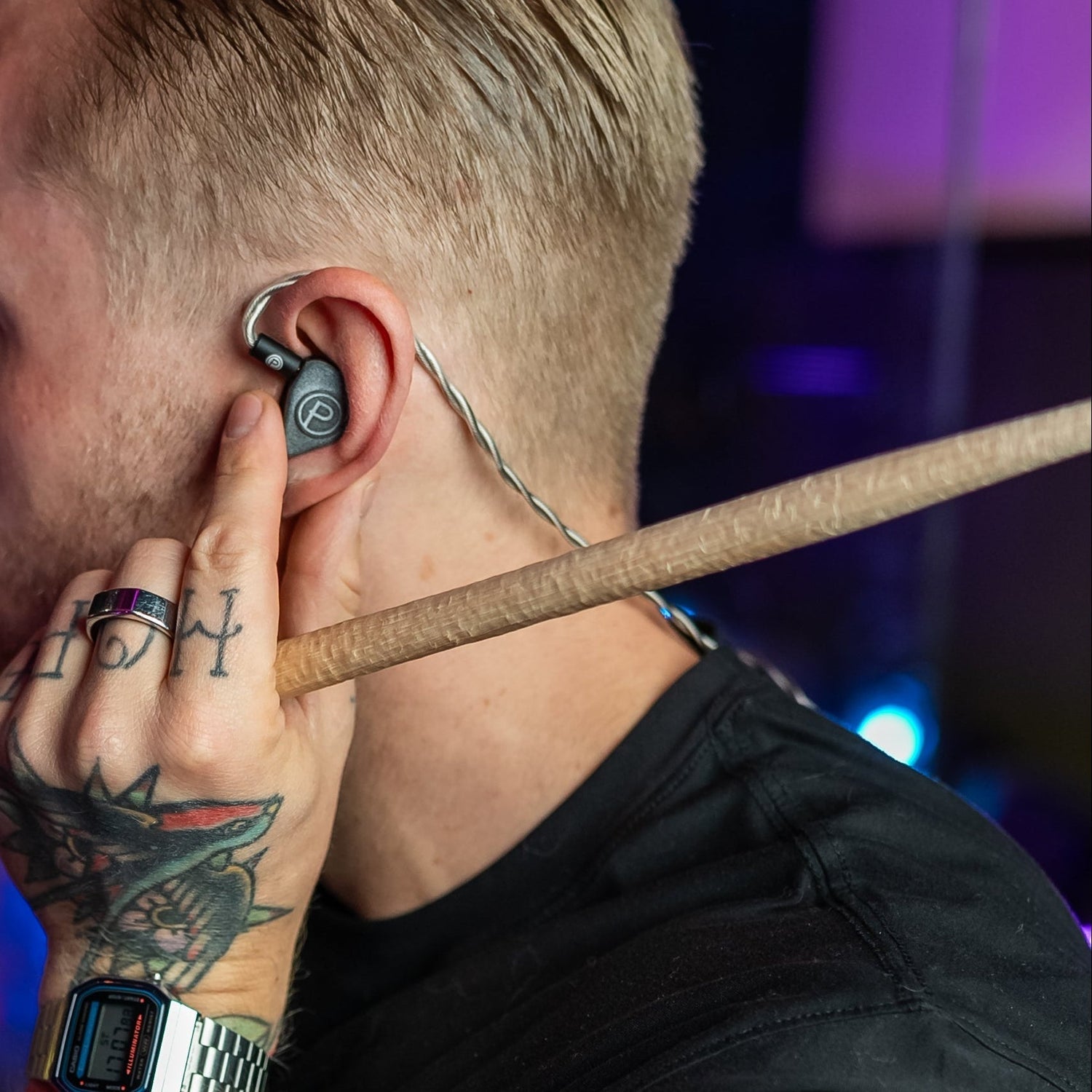
Photo Credit: Jay R. McDonald @jayrmcdonald
As a performer, your ears are your most valuable tools. While it’s easy to focus on gear, lighting, and stage presence, hearing health often gets overlooked — until it’s too late. Long-term exposure to loud volumes can lead to permanent hearing loss, tinnitus, or fatigue, which impacts not only your career but your everyday life.
In this guide, we’ll cover essential tips for protecting your ears on stage, so you can perform with confidence, clarity, and longevity.
Why Hearing Protection Matters for Musicians
Musicians and live performers are at risk for noise-induced hearing loss (NIHL) because of prolonged exposure to high decibel levels. According to the World Health Organization, a maximum average sound level of 100 dB should not be exceeded, but sustained sound above just 85 dB can cause damage to your hearing. On stage, sound levels often reach 100–120 dB, especially near monitors or drum kits.
Protecting your ears isn’t just about safety — it improves your performance. Healthy ears allow you to:
- Hear subtle dynamics in your own instrument or vocal
- Maintain accurate pitch and tone
- Make better mix decisions
- Reduce stage fatigue
Tips to Protect Your Ears on Stage
1. Use High-Quality In-Ear Monitors (IEMs)
Why: IEMs reduce stage volume by letting you hear a precise mix directly in your ears. They deliver clear audio at lower levels, cutting down the need for loud floor monitors.
Tip: Choose properly fitted IEMs to maintain natural sound without pressure or fatigue and keep both sides in at all times. Always keep your mix balanced — hearing one instrument too loudly can be just as damaging as overall volume.
2. Monitor Your Volume Levels
Why: Even with IEMs, excessive volume can strain your ears.
Tip: Use a decibel meter app or your sound engineer’s readings to keep your monitoring levels safe. A mix under 80 dB inside your IEMs is typically safe for prolonged exposure.
3. Schedule Ear Breaks
Why: Continuous exposure to loud sound reduces auditory recovery time.
Tip: Take short breaks during rehearsals or between sets to let your ears rest. Even 5–10 minutes in a quieter space can help prevent fatigue.
4. Invest in Quality Earplugs
Why: Musicians’ earplugs reduce volume without compromising clarity, unlike generic foam plugs.
Tip: Look for musician-specific plugs with flat attenuation or frequency-specific filters. They maintain tonal balance while reducing harmful levels.
5. Communicate With Your Sound Engineer
Why: Engineers can’t protect your ears if they don’t know your needs.
Tip: Discuss your desired stage volume, monitor mix, and any sensitivities before soundcheck. Consider using a stage talkback mic for communication without raising overall volume.
6. Stay Hydrated and Healthy
Why: Hydration and general health affect ear function and recovery.
Tip: Drink water throughout rehearsals and shows. Avoid excessive caffeine or alcohol, which can exacerbate tinnitus or ear fatigue.
7. Regular Hearing Checks
Why: Early detection is critical.
Tip: Schedule annual hearing tests with an audiologist, especially if you notice ringing, muffled hearing, or fatigue after shows.
Conclusion
Your ears are the foundation of your musical career. Protecting them with IEMs, earplugs, proper positioning, and smart monitoring habits ensures you can perform at your best — now and in the future.
Investing in your hearing is investing in your performance. A healthy ear today means more confidence, clarity, and enjoyment on stage tomorrow.


